Tea has always been more than a beverage. Across cultures, it is a refined way of gathering, observance of social ritual, and creating connection — to nature, to tradition, and to one another.
At Tushita, tea culture is a living practice. Our skilled baristas connect the tea’s origin and style with the matching preparation to bring out the uniqueness of each. In this way, we hope to bring the beauty of tea to your table – for yourself or to share with others.
The tea cultures that inspire us at Tushita Tea House have developed over centuries in East Asia, starting in China, the home country of tea.
The first discovery of tea is shrouded in myth, one well known version ascribes it to the legendary prehistoric emperor Shennong, who drank hot water that a few tea leaves had accidentally dropped in.
The origin of the tea plant can be traced to the jungles of Yunnan province in southeastern China, bordering Vietnam, Laos and Myanmar. Several ethnic minorities in the area include the tea plant in their world creation myth, showing the high status that tea occupies in their cultural narratives. Their tea is often consumed in ritual contexts, also in ways that seem unfamiliar to the modern eye.
Legends aside, tea was likely discovered and absorbed into the mainstream of Chinese culture in the early phase of the Tang Dynasty, ca. 600 AD and was widely adopted in the following centuries. A first full treatise on tea is the Cha Jing, The “Classic of Tea” by Lu Yu, written during the reign of the Xuanzong Emperor in 760 AD. In it, Lu Yu describes the origin of tea, ways of tea preparation as well as all tools and implements that were used at the time, giving us invaluable historical information.
Chief among the reasons for the popularization of tea, besides taste, is its invigorating effect, as well as the absence of intoxication. Up until the discovery of the tea plant, alcohol was widespread in ritual and social contexts in ancient China.
Several schools of Buddhism had spread from India to China via the Silk Road in the preceding centuries and adapted to Chinese culture. Especially the Chan school came to value tea as a means to fight drowsiness and fatigue during their meditation practices, so that Tea plantations were often set up adjacent to Chan monasteries and the knowledge of cultivation and preparation was passed on there.
A popular legend ascribes the discovery of tea to Bodhidharma, an Indian meditation master that transmitted Chan Buddhism to China. According to the legend, Bodhidharma meditated facing a cave wall near Shaolin Temple for 9 years. Drowsy and tired from the strenuous concentration, he angrily cut off his falling eyelids and threw them to the ground, where they transformed into a tea plant.
Although this legend is a fanciful elaboration, it highlights the importance of tea for the Chan school, an association that continues until today, especially also in the Japanese branches of the Chan/Zen school.
Outside of ritual contexts, tea became an important trading good and the Chinese imperial court collected tribute tea as taxes from the provinces of origin. At that time, tea was steamed and compressed into bricks and dried, to be consumed either boiled as a stew with herbs and salt. Later, during the Song Dynasty, powdered tea became popular, the predecessor of todays Matcha.
It was at that time, that tea cultivation spread to Japan and Korea along with Chan/Zen Buddhism. In Japan, the older style of steam-processing tea as well as the tradition of powdered Tea is continued until today.
The contemporary form of full leaf tea was only introduced around 1400 AD when the Hongwu Emperor, founder of the Chinese Ming Dynasty decreed that imperial tribute teas were to be collected as whole leaf teas instead of tea bricks. The new preparation style – pan-firing instead of steaming the fresh leaves – was faster in processing, less labor intensive and resulted in more pleasing flavor profiles, so that the older style of steam-processing gradually fell out of use in China.
In the following centuries, tea as a beverage and as a leisure culture spread through all layers of Chinese society and new processing styles, such as Oolong Teas, Black Teas and Pu’er Teas developed, along with matching teawares.
Upon contact with the West, tea became important in international trade, indeed so important that the English set up their own tea plantations in colonial India to break the Chinese monopoly, thus laying the foundations for tea culture in India and Sri Lanka.
From East Asian traditions to their contemporary interpretations, tea at Tushita Tea House is approached as a craft rooted in knowledge, patience, and respect.
As tea has such a large variety of regional styles and possible flavor outcomes, tea preparation plays an essential role. The choice of tea, water, vessels, and brewing procedure all greatly influence the result. Our Baristas are therefore trained to respect procedure for each tea style, while remaining attentive to the minutiae that make the experience great.
Matcha holds a unique rank within tea culture as a prestigious form traditionally associated with the cultural elite.
Its origins trace back to the classical style of tea preparation from the “Golden Age” of Song Dynasty Chinese culture that was then transmitted to Japan and refined over centuries, while falling out of fashion on the mainland.
Initially used by Zen monks as an invigorant, Matcha along with meditation became popular first with the Japanese nobility and later the ascendant warrior class during a time of civil war, when alertness and concentration were seen as essential personal qualities.
While Matcha was at first associated with refined Chinese high culture, the preparation and consumption of Matcha was popularized and styled by several tea masters in the 14th century, notably Sen no Rikyu and his teachers Murata Juko and Takeno Jo’o. Especially Sen no Rikyu is remembered today as the “father of Japanese Tea Ceremony” or Chanoyu
Murata Juko coined the term “Wabi Cha” which expresses a rustic and intentionally unrefined “natural” style of tea, instead of stiff ceremonial pomp. This aesthetic principle became the style of most Japanese schools of Tea Ceremony until today. It is meant to foster peace, understanding and connection between participants by dropping off all facades and differences in social status during the ceremony.
During the prosperous and cosmopolitan Edo period, the descendants of Sen no Rikyu formed the Sansenke, the “three Sen families” that are to this day the largest schools of Tea Ceremony, namely Omotesenke, Urasenke and Mushakojisenke. In each school, drinking Matcha is elevated into a spiritual way of living as Chado, the “way of tea”
From the beginning, Matcha and Zen evolved together in Japan, this is evident from the saying “Chazen Ichimi“, meaning “Zen and Tea have the same flavor”
Today, Matcha is popular both in its traditional form and context, as well as in modern preparations, such as Matcha Latte, Matcha Ice Cream, Matcha Tiramisu, Matcha Cake or others.
Matcha is healthy, it contains high amounts of Vitamine C as well as Catechins that have been proven to slow aging and boost immune functions.
Bright vibrant green due to a sophisticated growing technique and ground superfine on granite mills, Matcha now has won over fans all over the world.
At Tushita Tea House, we approach Matcha both in its traditional and contemporary forms, always with respect for its origin and cultural context. Whether encountered for the first time or revisited as a familiar ritual, Matcha invites us to take a break from our hectic lives and find a different rhythm and focus.
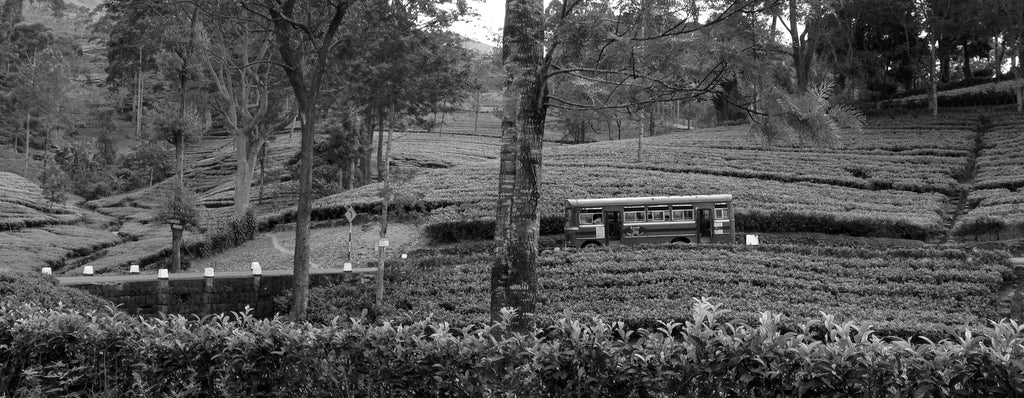
Tea culture does not exist in isolation. It developed alongside other forms of cultural expressions that influence each other. At Tushita Gallery, it is explored through sound, movement, and artistic expression.
Practices such as sound baths, zen flute experiences, Qi Gong, and exhibitions offer ways to encounter tea beyond taste alone. These experiences open space for listening, sensing, and quiet participation — extending tea culture into a broader cultural dialogue.
Guided tastings invite attention to the sensory and cultural dimensions of tea. Through quiet observation and shared experience, tea becomes a medium for learning, connection, and appreciation.